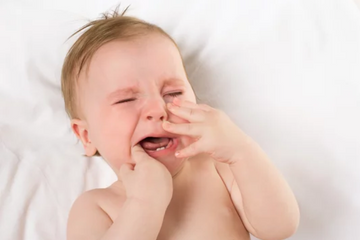
Teething is one of those milestones parents hear about constantly, yet it can still feel confusing when it actually starts happening.
When will the first tooth come in?
Which teeth come next?
Why do some stages seem harder than others?
While every baby is different, there is a general pattern to tooth eruption that pediatric experts recognize.
Understanding what typically happens between birth and 24 months can help you feel more prepared and confident as your baby moves through each phase.
If you’re currently navigating discomfort, you may also find our guide How to Soothe a Teething Baby helpful for day and night relief strategies.
When Do Babies Start Teething?
According to the American Academy of Pediatrics (AAP), most babies begin teething between 4 and 7 months, though some may start earlier or later.
Teething is a process, not a single event. Each new tooth can bring a short period of gum discomfort as it moves toward the surface.
Baby Teething Timeline at a Glance
While timing varies, a common sequence looks like this:
-
4–7 months: Bottom front teeth (central incisors)
-
8–12 months: Top front teeth (central incisors)
-
9–16 months: Lateral incisors (next to front teeth)
-
13–19 months: First molars
-
16–23 months: Canines (pointed teeth)
-
23–30 months: Second molars
Molars tend to cause the most discomfort because they are larger and move more gum tissue.
0–3 Months: No Teeth Yet (But Preparation Begins)
Most babies do not have visible teething symptoms in the first few months.
However, babies naturally explore with their mouths. Chewing and mouthing behaviors during this stage are developmentally normal and not always a sign of teething.
Helpful habits to build early:
-
Offer safe, age-appropriate teethers for exploration
-
Begin gentle oral care by wiping gums with a clean, damp cloth
4–7 Months: First Teeth (Bottom Front)
This is when many parents notice classic teething signs.
Common symptoms:
-
Increased drooling
-
Chewing on hands or toys
-
Mild fussiness
-
Shorter naps
Relief strategies:
-
Chilled (not frozen) silicone teethers
-
Gentle gum massage with a clean finger
-
Extra comfort and cuddles
Babies often benefit from firm, easy-to-hold teethers that allow them to control pressure themselves.
8–12 Months: Top Front Teeth
These teeth often follow shortly after the bottom front teeth.
You may see a repeat of earlier symptoms, including drooling and chewing.
Because many babies are becoming more mobile at this age, teething discomfort can overlap with developmental changes.
Maintaining consistent routines and offering a familiar teether during fussier moments can help.
If you’re unsure whether symptoms are related to teething or illness, our article Teething vs. Sickness: How to Tell the Difference breaks this down in detail.
9–16 Months: Lateral Incisors
These teeth sit next to the front teeth.
Symptoms are usually similar to earlier stages but may last slightly longer for some babies.
Helpful tips:
-
Rotate teethers between play areas
-
Offer before naps and bedtime
-
Keep expectations flexible
13–19 Months: First Molars
Molars are often considered the toughest stage.
Why?
They are larger and involve more gum surface area, which can increase discomfort.
You may notice:
-
Increased night wakings
-
Stronger chewing behavior
-
More clinginess
Focus on comfort-first care:
-
Gentle pressure
-
Calm bedtime routines
-
Extra reassurance
16–23 Months: Canines
Canines (pointed teeth) may cause moderate discomfort.
At this stage, toddlers are also developing stronger opinions and emotions, which can make teething feel more intense.
Continue using safe teething tools and consistent routines.
23–30 Months: Second Molars
These are often the final primary teeth to erupt.
Symptoms may resemble the first molar stage.
The good news: once these arrive, major teething phases are usually complete.
What’s Normal vs. What’s Not
Normal:
-
Drooling
-
Chewing
-
Mild fussiness
-
Short-term sleep disruptions
Not typically caused by teething:
-
Fever over 100.4°F
-
Severe diarrhea
-
Vomiting
-
Lethargy
If these occur, contact your pediatrician.
Safe Ways to Support Teething at Any Stage
Pediatric experts commonly recommend:
-
Firm silicone or rubber teethers
-
Chilled (not frozen) teethers
-
Gentle gum massage
-
Comfort and routine
Avoid:
-
Amber teething necklaces
-
Frozen solid teethers
-
Numbing gels unless directed by a pediatrician
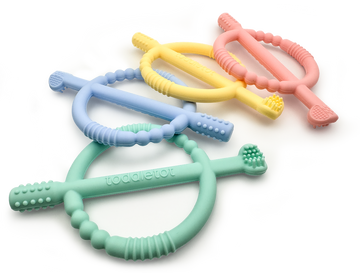
If you’re looking for a simple, food-grade silicone teether designed for easy grip and gentle pressure, our Toothee™ Silicone Baby Teether was created to support babies through these stages.
A Gentle Reminder
Teething is a long journey with many small phases.
Some stages will feel easy.
Others may feel harder.
Both are normal.
With safe tools, consistent routines, and reassurance, most babies move through teething successfully.
For practical relief tips, visit How to Soothe a Teething Baby.